


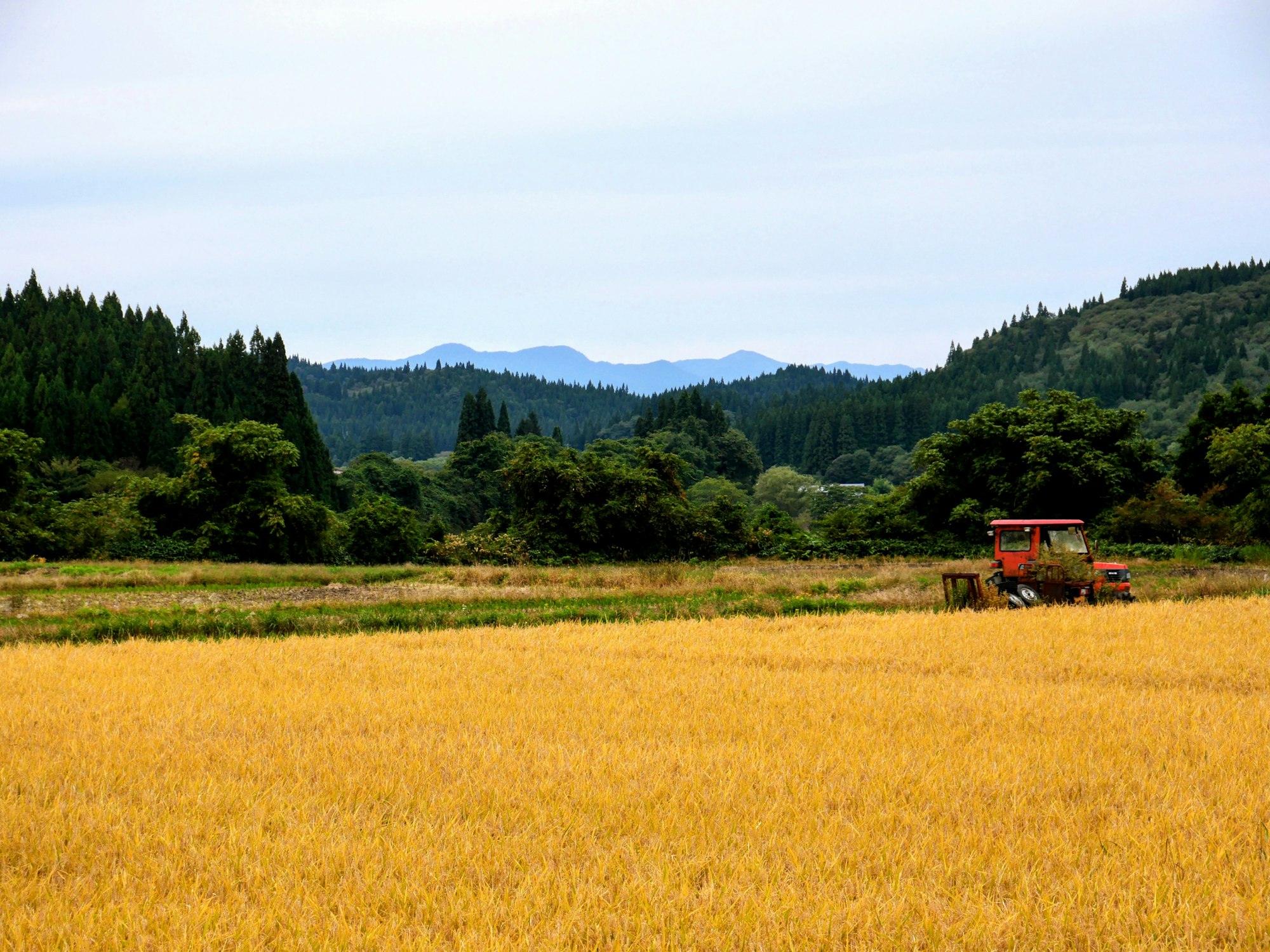
Every autumn in Japan there is one word that makes people smile: shinmai, the new rice. This year the Japanese rice of the new harvest arrives with good news for families. According to data from the Ministry of Agriculture, reported by Jiji Press on Nippon.com, in September the price that rice collectors charged wholesalers fell 42% compared with a year ago, as the first rice of the 2026 crop reached the market.
For two years rice was a worry in Japanese homes. Now the shelves are calmer. And for me, a Neapolitan who has lived here for almost forty years, this season is always a good moment to think about a grain that unites my two countries more than people imagine.
Japanese rice: a new harvest, a calmer market
The numbers are interesting. The September price, 21,293 yen per 60 kilos of brown rice, is still the third highest on record, after 2024 and 2025. In the supermarkets, Weathernews reported that the average price of a 5-kilo bag in mid-September was 2,934 yen, about 31% lower than the year before.
But a market is not only numbers. The same Jiji report reminds us that producers could face losses, because fuel and materials keep getting more expensive. When prices fall, the consumer is happy. The farmer, sometimes, is not. As a chef, I never forget who stands at the beginning of the chain.
On quality, the first signals are good. Weathernews wrote that Niigata Koshihikari, for example, is expected to have more top-grade rice than last year, and the full evaluations of the varieties arrive in November. Like truffles, like olive oil, rice also has its vintages.

In Japan, rice is the meal
The first thing I learned in Japan was a word: gohan. It means cooked rice, but it also means “meal”. Asagohan is breakfast, bangohan is dinner. In one word you understand everything: here, without rice, it is not a real meal.
Shinmai is a small celebration. The new rice is more fragrant and more moist, and many families cook it simply, with a little less water, to taste it pure. A bowl of white rice, a miso soup, a pickle. Nothing more. For a Neapolitan who grew up with the philosophy of the Margherita, few ingredients and all of them perfect, this is a very familiar idea.
And in Japan rice does not stop at the bowl. It becomes koji, the noble mould that gives life to miso, soy sauce and mirin. Here is a short film from Japan Video Topics about the new ways koji is used today. It is a beautiful lesson on how one grain can become a whole culture.
Naples and rice: from “sciacquapanza” to sartù
Now I must confess something about my city. For a long time Neapolitans did not love rice. It was considered food for the sick, and in dialect it had an unkind nickname: “sciacquapanza”, something that only rinses the belly. Naples was the city of pasta, of the “mangiamaccheroni”.
Then, in the aristocratic kitchens of the eighteenth century, the French-trained chefs that Neapolitans called “monsù” found a way to make rice irresistible: they hid it. They created the sartù, a great timbale of rice baked in a mould and filled with ragù, small meatballs, peas, mushrooms and cheese. The name, it is said, comes from the French “surtout”. Rice, dressed for a celebration.
I love this story because it is so Neapolitan. When we do not like something, we make it theatrical until we fall in love with it.

Cousins, not strangers
Many people do not know it, but Japanese rice and Italian risotto rice are cousins. Both belong to the japonica family: short, round grains, rich in starch. Italy is the largest rice producer in Europe, and in the paddies of Piedmont and Lombardy grow Carnaroli, Arborio and Vialone Nano, the grains of risotto.
The difference is in the hand of the cook. In Japan you wash the rice until the water runs clear, to remove the surface starch and obtain separate, shining grains. In Italy you never wash rice for risotto: you want that starch, because it creates the creaminess of the famous mantecatura. Same family, two philosophies. Both are right.
When I cook for Japanese guests, I see that they understand risotto immediately. They feel the grain, they want it al dente, with a heart. It is the same sensibility that made Japan love Neapolitan pizza: respect for texture.
From the field to the plate, in Hita
In my work today, this respect for the raw material is at the centre of everything. At Casa Cuomo Farm in Hita, in Oita, we grow Italian vegetables in Japanese soil, in a valley of mountains, rivers and rice fields. Living close to the countryside teaches you the calendar of nature: a time to plant, a time to wait, a time to harvest.
In our LAB in Hita we develop the products of Italyeria, our premium frozen brand, with the same rule. Good raw material, correct technique, no shortcuts. Whether it is a pizza, a sauce or a rice dish, the quality of the plate is decided long before the kitchen. It is decided in the field.

A bowl of new rice, a plate of risotto
So this autumn my advice is simple. Buy a bag of shinmai and taste it pure, with respect, the Japanese way. Then, one evening, make a risotto with the mushrooms of the season, slowly, stirring with patience. Or, if you feel brave and very Neapolitan, prepare a sartù for Sunday lunch with your family.
Two countries, one grain. And the same lesson I have learned in almost forty years between Naples and Japan: the simplest things are the most difficult, and the most precious.
Salvatore Cuomo
日本の米とナポリの食卓 ― 新米の季節が教えてくれること
日本では毎年秋になると、人々を笑顔にする言葉があります。「新米」です。今年の新米は、家庭にうれしい知らせとともにやって来ました。Nippon.comに掲載された時事通信の記事によると、農林水産省のデータでは、2026年産の新米が市場に出始めた9月、集荷業者が卸売業者に販売した米の価格は前年同月より42%も下がったそうです。
この2年間、お米は日本の家庭の悩みの種でした。今、売り場はようやく落ち着きを取り戻しつつあります。そして40年近くこの国で暮らすナポリ出身の私にとって、この季節は、私の二つの祖国を人々が想像する以上に結びつけている一粒の穀物について考える、よい機会なのです。
日本の米 ― 新しい収穫、落ち着きを取り戻す市場
数字は興味深いものです。9月の価格は玄米60キロあたり21,293円。それでも2024年、2025年に次いで過去3番目の高さです。スーパーでは、ウェザーニュースの報道によると、9月中旬の5キロ袋の平均価格は2,934円で、前年より約31%安くなりました。
しかし、市場は数字だけではありません。同じ時事通信の記事は、燃料や資材の値上がりが続くなかで、生産者が赤字に陥るおそれがあることも伝えています。価格が下がれば消費者は喜びます。でも農家は、必ずしもそうではありません。料理人として、私は食の連鎖の最初に誰がいるのかを決して忘れません。
品質については、最初の兆しは良好です。ウェザーニュースによれば、たとえば新潟のコシヒカリは昨年より一等米の比率が高くなる見込みで、品種ごとの本格的な評価は11月に出そろうそうです。トリュフのように、オリーブオイルのように、お米にもヴィンテージがあるのです。
日本では、お米こそが食事
日本で私が最初に覚えたのは、ひとつの言葉でした。「ごはん」。炊いたお米のことですが、同時に「食事」という意味でもあります。朝ごはん、晩ごはん。この一言で、すべてがわかります。ここでは、お米がなければ本当の食事ではないのです。
新米はささやかなお祭りです。新しいお米は香りが高く、みずみずしい。多くの家庭では、水を少し控えめにしてシンプルに炊き、そのままの味を楽しみます。白いごはんに味噌汁、そして漬物。それだけ。少ない材料をすべて完璧に、というマルゲリータの哲学で育ったナポリ人の私には、とても親しみのある考え方です。
そして日本では、お米はお茶碗の中だけにとどまりません。味噌や醤油、みりんに命を吹き込む高貴なカビ、麹にもなります。今日の麹の新しい使い方を紹介する、Japan Video Topicsの短い映像をご覧ください。一粒の穀物がひとつの文化全体になり得ることを教えてくれる、美しい教訓です。
ナポリと米 ―「シャックアパンツァ」からサルトゥへ
ここで、私の街についてひとつ告白しなければなりません。長いあいだ、ナポリの人々はお米が好きではありませんでした。病人の食べ物とみなされ、方言では「シャックアパンツァ」、つまりお腹をすすぐだけのもの、というつれないあだ名で呼ばれていたのです。ナポリはパスタの街、「マンジャマッケローニ(マカロニ食い)」の街でした。
その後、18世紀の貴族の厨房で、ナポリの人々が「モンスー」と呼んだフランス仕込みの料理人たちが、お米を抗いがたいご馳走にする方法を見つけました。お米を隠したのです。彼らが生み出したのがサルトゥ。型に入れてオーブンで焼き上げる米の大きなティンバッロで、中にはラグー、小さなミートボール、グリーンピース、きのこ、チーズがたっぷり詰まっています。名前はフランス語の「シュルトゥ(surtout)」に由来すると言われています。晴れ着をまとったお米です。
私はこの物語が大好きです。とてもナポリらしいからです。好きになれないものがあると、私たちはそれを芝居仕立てにして、ついには恋に落ちてしまうのです。
他人ではなく、いとこ同士
あまり知られていませんが、日本の米とイタリアのリゾット米はいとこ同士です。どちらもジャポニカ種に属し、短く丸い粒で、でんぷんを豊富に含んでいます。イタリアはヨーロッパ最大の米の生産国で、ピエモンテやロンバルディアの水田では、リゾットのための米、カルナローリ、アルボリオ、ヴィアローネ・ナーノが育っています。
違いは料理人の手にあります。日本では水が澄むまでお米を研ぎ、表面のでんぷんを落として、一粒一粒が立った艶やかなごはんに炊き上げます。イタリアでは、リゾットのお米は決して洗いません。そのでんぷんこそが、あの有名な「マンテカトゥーラ」のクリーミーさを生むからです。同じ家族、二つの哲学。どちらも正しいのです。
日本のお客様のために料理をすると、皆さんがすぐにリゾットを理解してくださるのがわかります。粒を感じ、芯のあるアルデンテを求めます。日本がナポリピッツァを愛してくれたのと同じ感性、食感への敬意です。
畑から皿へ、日田で
今の私の仕事では、この素材への敬意がすべての中心にあります。大分県日田市のCasa Cuomo Farmでは、山と川と田んぼに囲まれた盆地で、イタリア野菜を日本の土で育てています。田園の近くで暮らすと、自然の暦を教えられます。植える時、待つ時、そして収穫の時です。
日田のLABでは、私たちのプレミアム冷凍ブランドItalyeriaの商品を、同じルールで開発しています。良い素材、正しい技術、そして近道はしないこと。ピッツァでも、ソースでも、お米の料理でも、一皿の品質は厨房よりずっと前に決まります。それは畑で決まるのです。
新米をひと膳、リゾットをひと皿
ですから、この秋の私のおすすめはシンプルです。新米をひと袋買って、日本のやり方で、敬意をこめてそのまま味わってください。そしてある晩には、旬のきのこでリゾットをつくってみてください。ゆっくりと、根気よく混ぜながら。もし勇気があって、とびきりナポリ気分なら、日曜日のお昼に家族のためにサルトゥを焼いてみてください。
二つの国、ひとつの穀物。そしてナポリと日本のあいだで過ごした40年近くのなかで、私が学んだのと同じ教えがあります。いちばんシンプルなものこそ、いちばん難しく、そしていちばん尊いのです。
サルヴァトーレ・クオモ
Il riso giapponese e la tavola napoletana: le lezioni della stagione dello shinmai
Ogni autunno in Giappone c’è una parola che fa sorridere tutti: shinmai, il riso nuovo. Quest’anno il riso giapponese del nuovo raccolto arriva con una buona notizia per le famiglie. Secondo i dati del Ministero dell’Agricoltura, riportati da Jiji Press su Nippon.com, a settembre il prezzo praticato dai centri di raccolta ai grossisti è sceso del 42% rispetto a un anno fa, mentre il primo riso del raccolto 2026 arrivava sul mercato.
Per due anni il riso è stato una preoccupazione nelle case giapponesi. Ora gli scaffali sono più tranquilli. E per me, napoletano che vive qui da quasi quarant’anni, questa stagione è sempre un buon momento per pensare a un chicco che unisce i miei due Paesi più di quanto si immagini.
Il riso giapponese: un nuovo raccolto, un mercato più calmo
I numeri sono interessanti. Il prezzo di settembre, 21.293 yen per 60 chili di riso integrale, resta comunque il terzo più alto di sempre, dopo il 2024 e il 2025. Nei supermercati, secondo Weathernews, a metà settembre il prezzo medio di un sacco da 5 chili era di 2.934 yen, circa il 31% in meno rispetto all’anno prima.
Ma un mercato non è fatto solo di numeri. Lo stesso articolo di Jiji ricorda che i produttori potrebbero andare in perdita, perché carburante e materiali continuano a rincarare. Quando i prezzi scendono, il consumatore è contento. Il contadino, a volte, no. Da cuoco, non dimentico mai chi c’è all’inizio della filiera.
Sulla qualità, i primi segnali sono buoni. Weathernews scrive che il Koshihikari di Niigata, per esempio, dovrebbe avere più riso di prima categoria dell’anno scorso, e le valutazioni complete delle varietà arriveranno a novembre. Come il tartufo, come l’olio d’oliva, anche il riso ha le sue annate.
In Giappone il riso è il pasto
La prima cosa che ho imparato in Giappone è stata una parola: gohan. Vuol dire riso cotto, ma vuol dire anche “pasto”. Asagohan è la colazione, bangohan è la cena. In una parola si capisce tutto: qui, senza riso, non è un vero pasto.
Lo shinmai è una piccola festa. Il riso nuovo è più profumato e più umido, e molte famiglie lo cuociono in modo semplice, con un po’ meno acqua, per gustarlo in purezza. Una ciotola di riso bianco, una zuppa di miso, un sottaceto. Nient’altro. Per un napoletano cresciuto con la filosofia della Margherita, pochi ingredienti e tutti perfetti, è un’idea molto familiare.
E in Giappone il riso non si ferma alla ciotola. Diventa koji, la muffa nobile che dà vita al miso, alla salsa di soia e al mirin. Ecco un breve filmato di Japan Video Topics sui nuovi modi in cui oggi si usa il koji. È una bella lezione su come un solo chicco possa diventare un’intera cultura.
Napoli e il riso: dallo “sciacquapanza” al sartù
Adesso devo confessare una cosa sulla mia città. Per molto tempo i napoletani non hanno amato il riso. Era considerato cibo per malati, e in dialetto aveva un soprannome poco gentile: “sciacquapanza”, una cosa che sciacqua solo la pancia. Napoli era la città della pasta, dei “mangiamaccheroni”.
Poi, nelle cucine aristocratiche del Settecento, i cuochi di scuola francese che i napoletani chiamavano “monsù” trovarono il modo di rendere il riso irresistibile: lo nascosero. Crearono il sartù, un grande timballo di riso cotto al forno in uno stampo e ripieno di ragù, polpettine, piselli, funghi e formaggio. Il nome, si dice, viene dal francese “surtout”. Il riso, vestito a festa.
Amo questa storia perché è così napoletana. Quando una cosa non ci piace, la rendiamo teatrale finché non ce ne innamoriamo.
Cugini, non estranei
Molti non lo sanno, ma il riso giapponese e il riso italiano da risotto sono cugini. Appartengono entrambi alla famiglia japonica: chicchi corti e tondi, ricchi di amido. L’Italia è il primo produttore di riso d’Europa, e nelle risaie del Piemonte e della Lombardia crescono il Carnaroli, l’Arborio e il Vialone Nano, i chicchi del risotto.
La differenza sta nella mano del cuoco. In Giappone si lava il riso finché l’acqua non diventa limpida, per togliere l’amido in superficie e ottenere chicchi separati e lucenti. In Italia il riso per il risotto non si lava mai: quell’amido lo vogliamo, perché crea la cremosità della famosa mantecatura. Stessa famiglia, due filosofie. Hanno ragione tutte e due.
Quando cucino per ospiti giapponesi, vedo che capiscono subito il risotto. Sentono il chicco, lo vogliono al dente, con un’anima. È la stessa sensibilità che ha fatto innamorare il Giappone della pizza napoletana: il rispetto per la consistenza.
Dal campo al piatto, a Hita
Nel mio lavoro di oggi questo rispetto per la materia prima è al centro di tutto. A Casa Cuomo Farm, a Hita, nella prefettura di Oita, coltiviamo verdure italiane nella terra giapponese, in una valle di montagne, fiumi e risaie. Vivere vicino alla campagna ti insegna il calendario della natura: un tempo per piantare, un tempo per aspettare, un tempo per raccogliere.
Nel nostro LAB di Hita sviluppiamo i prodotti di Italyeria, il nostro marchio di surgelati premium, con la stessa regola. Buona materia prima, tecnica corretta, nessuna scorciatoia. Che sia una pizza, un sugo o un piatto di riso, la qualità del piatto si decide molto prima della cucina. Si decide nel campo.
Una ciotola di riso nuovo, un piatto di risotto
Allora quest’autunno il mio consiglio è semplice. Comprate un sacchetto di shinmai e gustatelo in purezza, con rispetto, alla giapponese. Poi, una sera, fate un risotto con i funghi di stagione, lentamente, mescolando con pazienza. Oppure, se vi sentite coraggiosi e molto napoletani, preparate un sartù per il pranzo della domenica con la famiglia.
Due Paesi, un solo chicco. E la stessa lezione che ho imparato in quasi quarant’anni tra Napoli e il Giappone: le cose più semplici sono le più difficili, e le più preziose.
Salvatore Cuomo
Le riz japonais et la table napolitaine : les leçons de la saison du shinmai
Chaque automne, au Japon, un mot fait sourire tout le monde : shinmai, le riz nouveau. Cette année, le riz japonais de la nouvelle récolte arrive avec une bonne nouvelle pour les familles. Selon les données du ministère de l’Agriculture, rapportées par Jiji Press sur Nippon.com, en septembre le prix pratiqué par les collecteurs auprès des grossistes a baissé de 42 % par rapport à l’année précédente, au moment où le premier riz de la récolte 2026 arrivait sur le marché.
Pendant deux ans, le riz a été un souci dans les foyers japonais. Aujourd’hui, les rayons sont plus calmes. Et pour moi, Napolitain qui vit ici depuis près de quarante ans, cette saison est toujours un bon moment pour penser à un grain qui unit mes deux pays bien plus qu’on ne l’imagine.
Le riz japonais : une nouvelle récolte, un marché plus calme
Les chiffres sont intéressants. Le prix de septembre, 21 293 yens pour 60 kilos de riz brun, reste malgré tout le troisième plus élevé jamais enregistré, après 2024 et 2025. Dans les supermarchés, selon Weathernews, le prix moyen d’un sac de 5 kilos à la mi-septembre était de 2 934 yens, environ 31 % de moins que l’année précédente.
Mais un marché, ce ne sont pas seulement des chiffres. Le même article de Jiji rappelle que les producteurs pourraient travailler à perte, car le carburant et les matériaux continuent d’augmenter. Quand les prix baissent, le consommateur est content. L’agriculteur, parfois, ne l’est pas. En tant que chef, je n’oublie jamais qui se trouve au début de la chaîne.
Pour la qualité, les premiers signes sont bons. Weathernews écrit que le Koshihikari de Niigata, par exemple, devrait compter plus de riz de première catégorie que l’an dernier, et les évaluations complètes des variétés arriveront en novembre. Comme la truffe, comme l’huile d’olive, le riz a lui aussi ses millésimes.
Au Japon, le riz, c’est le repas
La première chose que j’ai apprise au Japon, c’est un mot : gohan. Il signifie riz cuit, mais aussi « repas ». Asagohan, c’est le petit-déjeuner, bangohan, le dîner. En un seul mot, on comprend tout : ici, sans riz, ce n’est pas un vrai repas.
Le shinmai est une petite fête. Le riz nouveau est plus parfumé et plus moelleux, et beaucoup de familles le cuisent simplement, avec un peu moins d’eau, pour le goûter nature. Un bol de riz blanc, une soupe miso, un légume mariné. Rien de plus. Pour un Napolitain qui a grandi avec la philosophie de la Margherita, peu d’ingrédients et tous parfaits, c’est une idée très familière.
Et au Japon, le riz ne s’arrête pas au bol. Il devient koji, la noble moisissure qui donne vie au miso, à la sauce soja et au mirin. Voici un court film de Japan Video Topics sur les nouvelles façons d’utiliser le koji aujourd’hui. C’est une belle leçon sur la manière dont un seul grain peut devenir toute une culture.
Naples et le riz : du « sciacquapanza » au sartù
Je dois maintenant avouer quelque chose sur ma ville. Pendant longtemps, les Napolitains n’ont pas aimé le riz. On le considérait comme une nourriture de malades, et en dialecte il avait un surnom peu aimable : « sciacquapanza », quelque chose qui ne fait que rincer le ventre. Naples était la ville des pâtes, des « mangiamaccheroni ».
Puis, dans les cuisines aristocratiques du XVIIIe siècle, les cuisiniers formés à la française que les Napolitains appelaient « monsù » ont trouvé le moyen de rendre le riz irrésistible : ils l’ont caché. Ils ont créé le sartù, une grande timbale de riz cuite au four dans un moule et garnie de ragù, de petites boulettes, de petits pois, de champignons et de fromage. Le nom viendrait, dit-on, du français « surtout ». Le riz, habillé pour la fête.
J’adore cette histoire parce qu’elle est tellement napolitaine. Quand quelque chose ne nous plaît pas, nous en faisons du théâtre jusqu’à en tomber amoureux.
Cousins, pas étrangers
Beaucoup l’ignorent, mais le riz japonais et le riz italien à risotto sont cousins. Tous deux appartiennent à la famille japonica : des grains courts et ronds, riches en amidon. L’Italie est le premier producteur de riz d’Europe, et dans les rizières du Piémont et de Lombardie poussent le Carnaroli, l’Arborio et le Vialone Nano, les grains du risotto.
La différence est dans la main du cuisinier. Au Japon, on lave le riz jusqu’à ce que l’eau soit claire, pour enlever l’amidon de surface et obtenir des grains séparés et brillants. En Italie, on ne lave jamais le riz pour le risotto : cet amidon, on le veut, car il crée l’onctuosité de la fameuse mantecatura. Même famille, deux philosophies. Les deux ont raison.
Quand je cuisine pour des convives japonais, je vois qu’ils comprennent tout de suite le risotto. Ils sentent le grain, ils le veulent al dente, avec du cœur. C’est la même sensibilité qui a fait aimer la pizza napolitaine au Japon : le respect de la texture.
Du champ à l’assiette, à Hita
Dans mon travail d’aujourd’hui, ce respect de la matière première est au centre de tout. À Casa Cuomo Farm, à Hita, dans la préfecture d’Oita, nous cultivons des légumes italiens dans la terre japonaise, dans une vallée de montagnes, de rivières et de rizières. Vivre près de la campagne vous apprend le calendrier de la nature : un temps pour planter, un temps pour attendre, un temps pour récolter.
Dans notre LAB de Hita, nous développons les produits d’Italyeria, notre marque de surgelés haut de gamme, avec la même règle. Une bonne matière première, une technique juste, aucun raccourci. Qu’il s’agisse d’une pizza, d’une sauce ou d’un plat de riz, la qualité de l’assiette se décide bien avant la cuisine. Elle se décide dans le champ.
Un bol de riz nouveau, une assiette de risotto
Alors cet automne, mon conseil est simple. Achetez un sac de shinmai et goûtez-le nature, avec respect, à la japonaise. Puis, un soir, préparez un risotto aux champignons de saison, lentement, en remuant avec patience. Ou, si vous vous sentez courageux et très napolitain, préparez un sartù pour le déjeuner du dimanche en famille.
Deux pays, un seul grain. Et la même leçon que j’ai apprise en près de quarante ans entre Naples et le Japon : les choses les plus simples sont les plus difficiles, et les plus précieuses.
Salvatore Cuomo
일본 쌀과 나폴리의 식탁: 햅쌀(신마이)의 계절이 가르쳐 주는 것
일본에서는 해마다 가을이 되면 모두를 미소 짓게 하는 말이 있습니다. ‘신마이(新米)’, 바로 햅쌀입니다. 올해 새로 수확한 일본 쌀은 가정에 반가운 소식과 함께 찾아왔습니다. Nippon.com에 실린 지지통신 기사에 따르면, 농림수산성 자료에서 2026년산 햅쌀이 시장에 나오기 시작한 9월, 집하업자가 도매업자에게 판매한 쌀값이 1년 전보다 42%나 떨어졌습니다.
지난 2년 동안 쌀은 일본 가정의 걱정거리였습니다. 이제 매장은 한결 차분해졌습니다. 그리고 40년 가까이 이곳에서 살아온 나폴리 사람인 저에게 이 계절은, 사람들이 상상하는 것보다 훨씬 깊이 제 두 나라를 이어 주는 한 톨의 곡식을 생각해 보기에 좋은 때입니다.
일본 쌀: 새로운 수확, 안정을 찾아가는 시장
숫자는 흥미롭습니다. 9월 가격은 현미 60킬로그램당 21,293엔으로, 그래도 2024년과 2025년에 이어 역대 세 번째로 높은 수준입니다. 슈퍼마켓에서는 웨더뉴스의 보도에 따르면 9월 중순 5킬로그램 한 포대의 평균 가격이 2,934엔으로, 전년보다 약 31% 낮아졌습니다.
하지만 시장은 숫자만이 아닙니다. 같은 지지통신 기사는 연료비와 자재비가 계속 오르면서 생산자들이 적자를 볼 수 있다는 우려도 전합니다. 가격이 내려가면 소비자는 기쁩니다. 하지만 농부는 꼭 그렇지만은 않습니다. 요리사로서 저는 먹거리 사슬의 맨 처음에 누가 있는지를 결코 잊지 않습니다.
품질에 대해서는 첫 신호가 좋습니다. 웨더뉴스에 따르면 예를 들어 니가타의 고시히카리는 작년보다 1등급 쌀의 비율이 높아질 것으로 보이며, 품종별 본격적인 평가는 11월에 나온다고 합니다. 트러플처럼, 올리브오일처럼, 쌀에도 빈티지가 있는 것입니다.
일본에서는 쌀이 곧 식사입니다
제가 일본에서 처음 배운 것은 한 단어였습니다. ‘고항(ごはん)’. 지은 밥을 뜻하지만 동시에 ‘식사’를 뜻하기도 합니다. 아사고항은 아침 식사, 반고항은 저녁 식사입니다. 이 한마디로 모든 것을 알 수 있습니다. 이곳에서는 밥이 없으면 제대로 된 식사가 아닌 것입니다.
햅쌀은 작은 축제입니다. 새 쌀은 향이 더 좋고 촉촉하며, 많은 가정에서 물을 조금 줄여 소박하게 지어 그 맛을 그대로 즐깁니다. 흰 쌀밥 한 공기, 된장국, 그리고 절임 반찬. 그것뿐입니다. 적은 재료를 모두 완벽하게, 라는 마르게리타의 철학 속에서 자란 나폴리 사람에게는 아주 익숙한 생각입니다.
그리고 일본에서 쌀은 밥공기에서 멈추지 않습니다. 된장과 간장, 미림에 생명을 불어넣는 고귀한 곰팡이, 고지(누룩)가 됩니다. 오늘날 고지가 새롭게 쓰이는 방식을 소개하는 Japan Video Topics의 짧은 영상을 소개합니다. 한 톨의 곡식이 하나의 문화 전체가 될 수 있다는 것을 보여 주는 아름다운 교훈입니다.
나폴리와 쌀: ‘샤콰판차’에서 사르투까지
이제 제 도시에 대해 한 가지 고백해야겠습니다. 오랫동안 나폴리 사람들은 쌀을 좋아하지 않았습니다. 환자들이나 먹는 음식으로 여겨졌고, 방언으로는 ‘샤콰판차’, 즉 배만 헹구는 것이라는 박한 별명으로 불렸습니다. 나폴리는 파스타의 도시, ‘만자마케로니(마카로니 먹는 사람들)’의 도시였습니다.
그러다 18세기 귀족들의 주방에서, 나폴리 사람들이 ‘몬수’라고 부르던 프랑스식 훈련을 받은 요리사들이 쌀을 거부할 수 없는 요리로 만드는 방법을 찾아냈습니다. 쌀을 숨긴 것입니다. 그렇게 태어난 것이 사르투입니다. 틀에 넣어 오븐에 구운 커다란 쌀 팀발로로, 안에는 라구, 작은 미트볼, 완두콩, 버섯, 치즈가 가득 들어 있습니다. 이름은 프랑스어 ‘쉬르투(surtout)’에서 왔다고 합니다. 잔칫날 옷을 차려입은 쌀입니다.
저는 이 이야기를 정말 좋아합니다. 너무나 나폴리다운 이야기이기 때문입니다. 마음에 들지 않는 것이 있으면 우리는 그것을 한 편의 연극으로 만들어, 결국 사랑에 빠지고 맙니다.
남이 아니라 사촌입니다
잘 알려져 있지 않지만, 일본 쌀과 이탈리아의 리소토용 쌀은 사촌입니다. 둘 다 자포니카 계열에 속하며, 짧고 둥근 낟알에 전분이 풍부합니다. 이탈리아는 유럽 최대의 쌀 생산국이며, 피에몬테와 롬바르디아의 논에서는 리소토를 위한 쌀인 카르나롤리, 아르보리오, 비알로네 나노가 자랍니다.
차이는 요리사의 손에 있습니다. 일본에서는 물이 맑아질 때까지 쌀을 씻어 표면의 전분을 없애고, 한 알 한 알 살아 있는 윤기 나는 밥을 짓습니다. 이탈리아에서는 리소토용 쌀을 절대 씻지 않습니다. 그 전분이야말로 유명한 ‘만테카투라’의 크리미함을 만들어 내기 때문입니다. 같은 가족, 두 가지 철학. 둘 다 옳습니다.
일본 손님들을 위해 요리할 때면, 그분들이 리소토를 곧바로 이해한다는 것을 느낍니다. 낟알을 느끼고, 심이 살아 있는 알 덴테를 원합니다. 일본이 나폴리 피자를 사랑하게 된 것과 같은 감각, 바로 식감에 대한 존중입니다.
밭에서 접시까지, 히타에서
오늘 제 일에서는 이러한 식재료에 대한 존중이 모든 것의 중심에 있습니다. 오이타현 히타시의 Casa Cuomo Farm에서는 산과 강과 논으로 둘러싸인 분지에서 이탈리아 채소를 일본 땅에서 기르고 있습니다. 시골 가까이에서 살면 자연의 달력을 배우게 됩니다. 심을 때, 기다릴 때, 그리고 거둘 때가 있습니다.
히타의 LAB에서는 우리의 프리미엄 냉동 브랜드 Italyeria의 제품을 같은 원칙으로 개발하고 있습니다. 좋은 식재료, 올바른 기술, 그리고 지름길은 없다는 것. 피자든, 소스든, 쌀 요리든, 한 접시의 품질은 주방보다 훨씬 전에 결정됩니다. 그것은 밭에서 결정됩니다.
햅쌀 한 공기, 리소토 한 접시
그래서 올가을 제 조언은 간단합니다. 햅쌀 한 포대를 사서 일본식으로, 존중하는 마음으로 그 맛 그대로 즐겨 보십시오. 그리고 어느 저녁에는 제철 버섯으로 리소토를 만들어 보십시오. 천천히, 인내심을 갖고 저으면서. 혹은 용기가 있고 아주 나폴리다운 기분이라면, 일요일 점심에 가족을 위해 사르투를 구워 보십시오.
두 나라, 한 톨의 곡식. 그리고 나폴리와 일본 사이에서 보낸 40년 가까운 세월 동안 제가 배운 것과 같은 교훈이 있습니다. 가장 단순한 것이 가장 어렵고, 또 가장 소중하다는 것입니다.
살바토레 쿠오모
日本大米与那不勒斯的餐桌:新米季节给我的启示
每年秋天,日本都有一个让人微笑的词:“新米”,也就是新收获的大米。今年,新一季的日本大米给家庭带来了好消息。根据日本农林水产省的数据(时事通信社在Nippon.com上的报道),在2026年新米开始上市的9月,集货商卖给批发商的大米价格比一年前下降了42%。
过去两年,大米一直是日本家庭的烦恼。如今,货架终于平静了下来。而对我这个在这里生活了将近四十年的那不勒斯人来说,这个季节总是一个好时机,让我思考一粒谷物,它连接我的两个祖国,远比人们想象的更紧密。
日本大米:新的收成,渐趋平稳的市场
这些数字很有意思。9月的价格为每60公斤糙米21,293日元,但仍是有记录以来第三高,仅次于2024年和2025年。在超市里,据Weathernews报道,9月中旬一袋5公斤大米的平均价格为2,934日元,比前一年低了约31%。
但市场不只是数字。同一篇时事通信社的报道也提醒我们,由于燃料和物资价格持续上涨,生产者可能会出现亏损。价格下降,消费者高兴;而农民,有时却未必。作为厨师,我从不忘记站在这条链条最开端的是谁。
在品质方面,初步的信号很好。Weathernews写道,例如新潟的越光米,一等米的比例预计将高于去年,各品种的完整评价将在11月公布。就像松露,就像橄榄油,大米也有它的“年份”。
在日本,米饭就是一餐
我在日本学会的第一样东西是一个词:“ごはん”(gohan)。它的意思是米饭,同时也是“饭、一餐”。早饭叫“朝ごはん”,晚饭叫“晩ごはん”。一个词就说明了一切:在这里,没有米饭就不算真正的一餐。
新米是一场小小的节日。新米更香、更湿润,许多家庭会少放一点水,简单地煮,品尝它最纯粹的味道。一碗白米饭、一碗味噌汤、一碟渍菜,仅此而已。对于一个在玛格丽特披萨哲学——食材很少,但样样完美——中长大的那不勒斯人来说,这是再熟悉不过的想法。
而在日本,大米并不止步于饭碗。它会变成曲(koji),这种高贵的霉菌赋予味噌、酱油和味醂以生命。下面是Japan Video Topics的一段短片,介绍如今曲的各种新用法。它美丽地告诉我们,一粒谷物如何能够成为一整个文化。
那不勒斯与大米:从“sciacquapanza”到sartù
现在,我必须坦白一件关于我家乡的事。很长一段时间里,那不勒斯人并不喜欢大米。它被认为是病人吃的东西,在方言里还有一个不太友好的绰号:“sciacquapanza”,意思是只能涮涮肚子的东西。那不勒斯是意面之城,是“mangiamaccheroni”(吃通心粉的人)的城市。
后来,在18世纪的贵族厨房里,那些被那不勒斯人称为“monsù”、受过法式训练的厨师,找到了让大米变得令人无法抗拒的办法:把它藏起来。他们创造了sartù——一种放在模具里烤制的大型米饭馅饼(timballo),里面塞满肉酱、小肉丸、豌豆、蘑菇和奶酪。据说这个名字来自法语的“surtout”。这是盛装赴宴的大米。
我很喜欢这个故事,因为它太有那不勒斯味了。当我们不喜欢某样东西时,我们就把它变成一场戏,直到爱上它为止。
是表亲,不是陌生人
很多人不知道,日本大米和意大利烩饭用的米其实是表亲。它们都属于粳稻(japonica)家族:米粒短而圆,富含淀粉。意大利是欧洲最大的大米生产国,在皮埃蒙特和伦巴第的稻田里,生长着做烩饭的米:卡纳罗利(Carnaroli)、阿尔博里奥(Arborio)和维亚洛内纳诺(Vialone Nano)。
区别在于厨师的手。在日本,人们会把米淘洗到水变清,去掉表面的淀粉,煮出粒粒分明、晶莹发亮的米饭。在意大利,做烩饭的米从来不洗:我们要的正是那些淀粉,因为它们造就了著名的“mantecatura”(收汁拌匀)所带来的绵滑。同一个家族,两种哲学,两者都是对的。
当我为日本客人做菜时,我发现他们一下子就能理解烩饭。他们能感受到米粒,想要它保留嚼劲、带着米心的“al dente”。这和让日本爱上那不勒斯披萨的是同一种感觉:对口感的尊重。
从田间到餐盘,在日田
在我今天的工作中,这种对食材的尊重是一切的核心。在大分县日田市的Casa Cuomo Farm,我们在一个群山、河流与稻田环绕的盆地里,用日本的土地种植意大利蔬菜。住在乡村附近,会让你学会大自然的日历:有播种的时候,有等待的时候,也有收获的时候。
在日田的LAB里,我们以同样的原则开发高端冷冻品牌Italyeria的产品。好的食材,正确的技术,不走捷径。无论是披萨、酱汁还是一道米饭料理,一盘菜的品质早在厨房之前就已决定。它在田间决定。
一碗新米,一盘烩饭
所以,这个秋天我的建议很简单。买一袋新米,用日本的方式,怀着敬意品尝它最纯粹的味道。然后某个晚上,用当季的蘑菇做一道烩饭,慢慢地、耐心地搅拌。或者,如果你够勇敢、又特别有那不勒斯范儿,就在周日午餐时为家人做一个sartù吧。
两个国家,一粒谷物。还有我在那不勒斯与日本之间将近四十年里学到的同一个道理:最简单的东西,往往最难,也最珍贵。
萨尔瓦托雷·库莫
Photos: Sebastian S, Dennis Peterson, Pierre Bamin and Rob Wicks / Unsplash. Video: Japan Video Topics. Sources: Jiji Press via Nippon.com, Weathernews.


Leave a Reply